Is a lab-grown diamond a real diamond?
Yes — and here is why. Misconceptions, differences with cubic zirconia and moissanite, the position of the gemmological laboratories: the full answer.
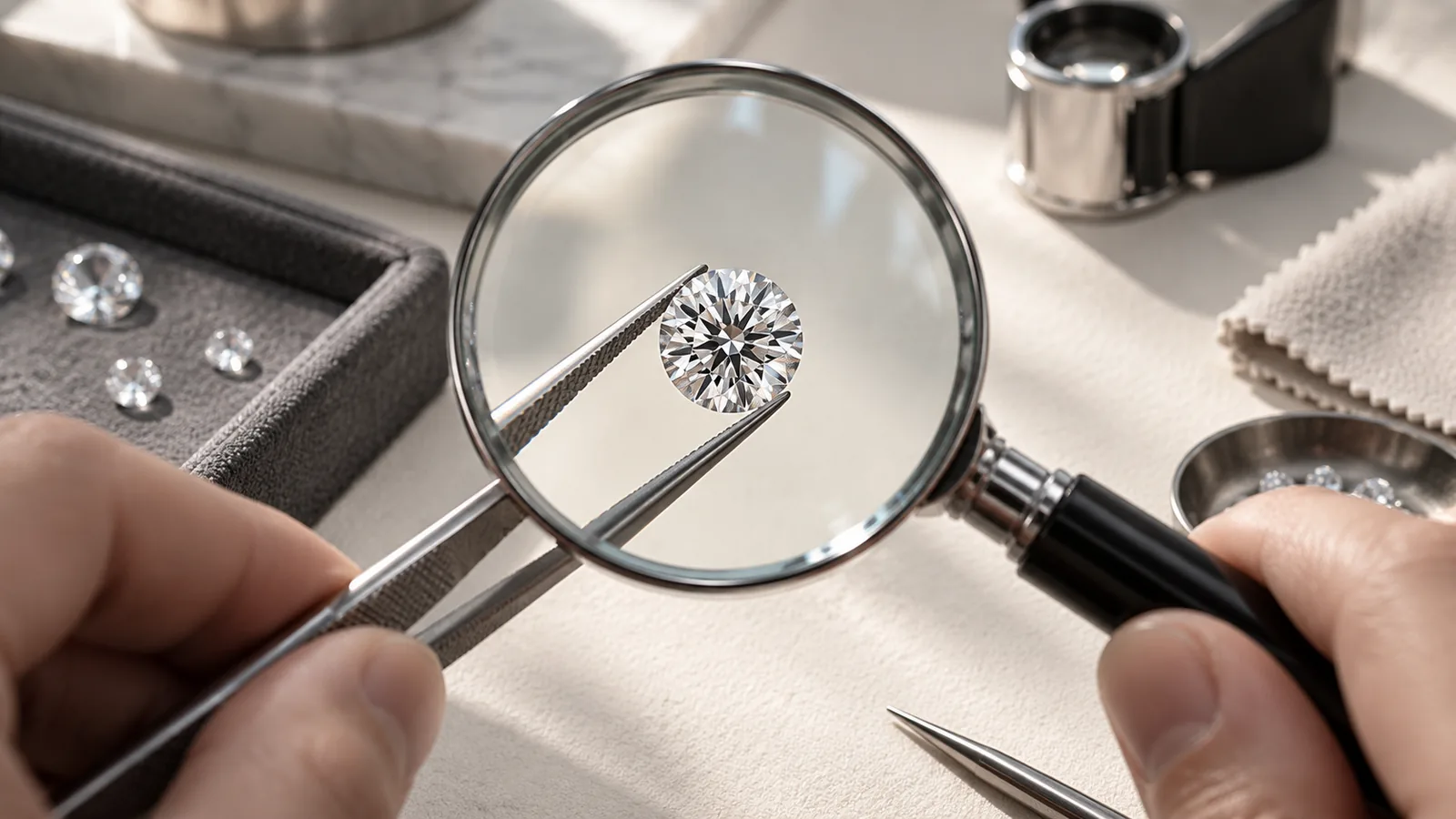
The short answer: yes
A lab-grown diamond is a diamond. It is not an imitation, not a 'simulant', not a crystal that merely looks like diamond: it is pure carbon crystallised in a cubic structure — the very definition of diamond. The authorities and the major gemmological laboratories designate it as a diamond, whose origin — grown rather than mined — simply has to be stated.
Not to be confused with imitations
That is where the confusion usually comes from: cubic zirconia and moissanite are imitations. They are other materials, with a different chemical composition, a different hardness, a different behaviour in the light. They imitate the look of a diamond; the lab-grown diamond IS diamond.
One simple test sums it up: a standard diamond tester, which measures thermal conductivity, identifies a lab-grown diamond as… a diamond. Because that is what it is.
What the certificates say
The IGI and GIA laboratories grade lab-grown diamonds by the same criteria as mined diamonds: carat, colour, clarity, cut. The certificate states the 'laboratory-grown' origin, and the report number is laser-inscribed on the stone's girdle. Transparency is total — it is even one of lab-grown's strong points.
So why the debate?
Because part of the industry long had an interest in keeping the doubt alive. The rarity of the natural diamond justifies its price; the lab-grown diamond, identical and accessible, upsets that story. At MICKAEL STONE, we have chosen our side: the real diamond, the origin owned, the fair price.
Frequently asked questions
Not by eye or loupe. Only specialised gemmological instruments identify a stone's origin.
Does a lab-grown diamond dull over time?No. Like any diamond, it is unalterable: it does not tarnish, yellow or scratch in normal wear.
See the lab-grown diamond creations →
© 2026 MICKAEL STONE PARIS · mickaelstone.com · Blog